Financial Applications
for Aerospace-Grade Simulations


This image comes from my orbital dynamics class, where we simulated the orbital trajectory of a satellite in a polar orbit. Typically, the earth rotates under a satellite in a polar orbit, but this visualization is fixed to the earth and makes it look like the orbit is moving around the planet. Don't worry, I've gotten better at making visualizations since this project.
Introduction
In my previous post, Vision-Aligned Budgeting, I discussed how natural it is for us to want to plan for and understand the future. But wanting clarity and actually achieving it are two very different things. Most financial tools give you a single, optimistic projection; a straight line into an idealized future.
In the aerospace industry, we would never trust a model like that.
This post shows how the same simulation techniques used to model rockets, turbulence, and mission risk can be used to model your financial life, and why doing so gives you a far more realistic picture of the future.
Aerospace, Finance, Chaos, and Risk
Before digging into simulation techniques, it's important to understand why we invest time and money in creating simulations. The answer comes down to two forces: chaos and risk.
To illustrate these concepts, consider two systems. In one, you drop a bowling ball. In the other, you drop a feather.
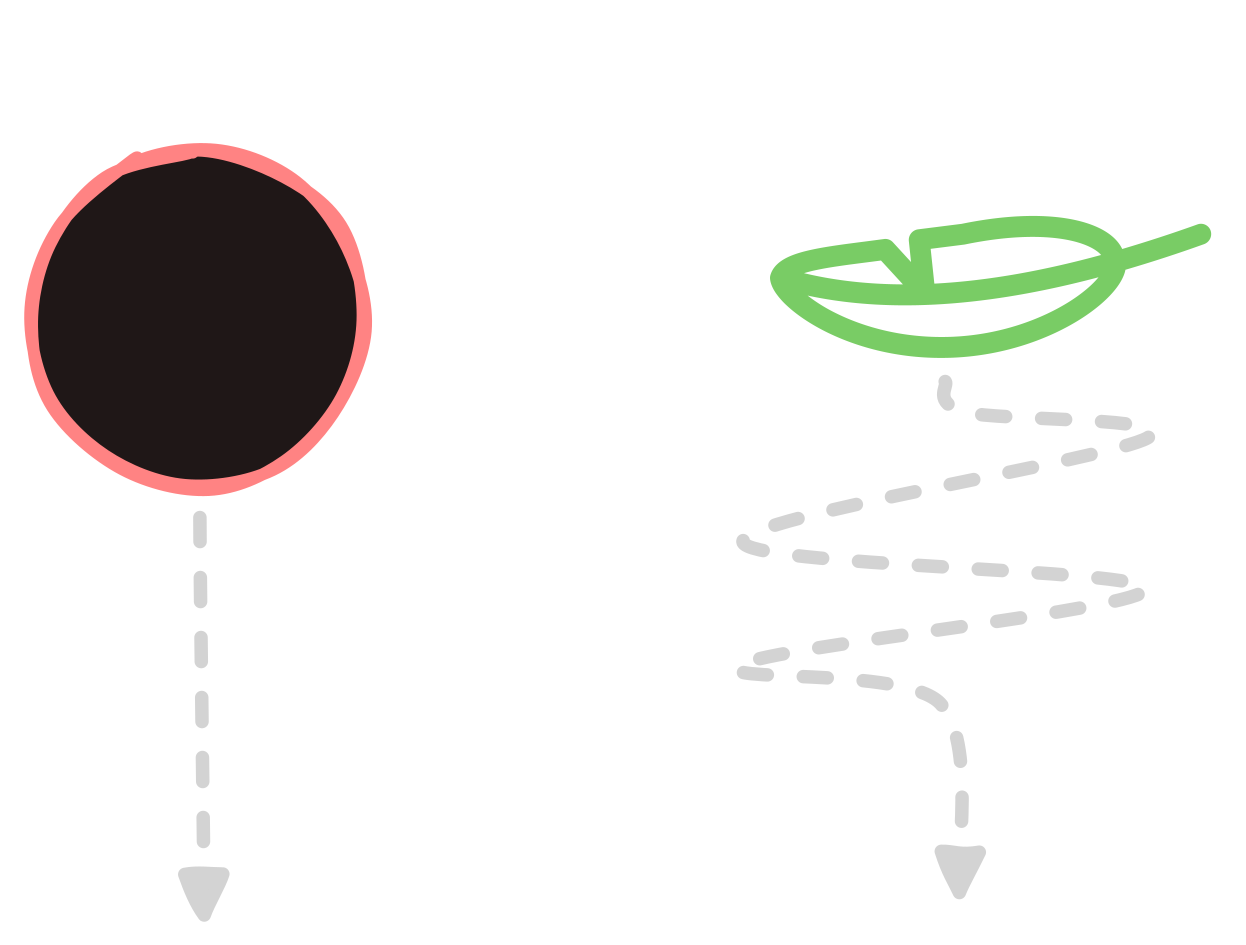
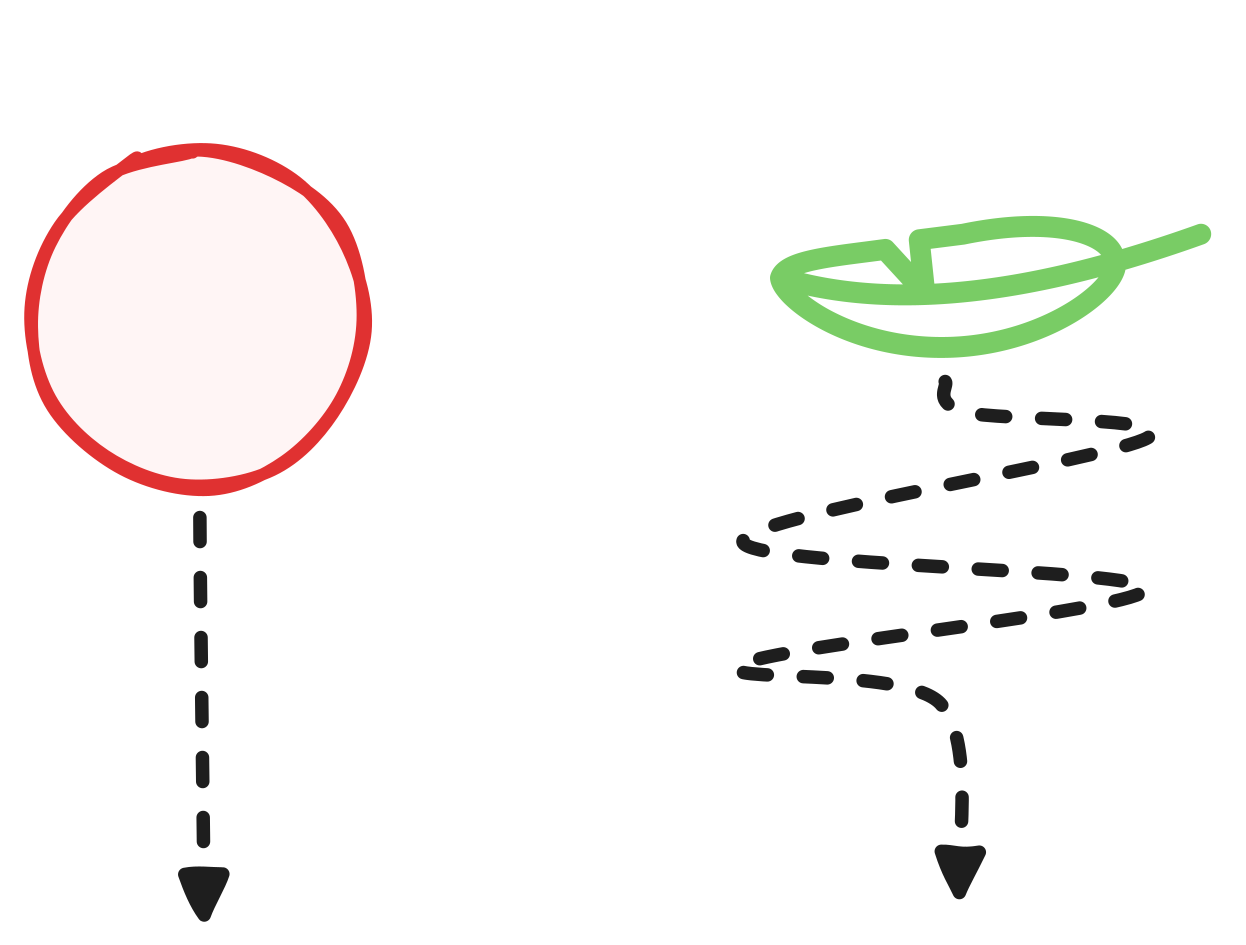
Intuitively, you expect the bowling ball to fall straight down. The feather, however, performs a graceful dance of twists and turns as it gently floats to the ground. The bowling ball is a system with low chaos while the feather is a system with high chaos.
With chaos comes risk. The bowling ball system is low-risk because you can easily control where it lands. The feather is high-risk because you can't.
The primary goal of simulation is to predict the chaos and assess the risk associated with any system. In both aerospace and finance, minor, unaddressed variations at the start can compound into catastrophic misses down the line. These two fields resemble the feather much more than the bowling ball.
Chaos in Aerospace
In aerospace, chaos shows up mainly in the environment and the hardware. For example:
- Atmospheric Variations
- Temperature, pressure, and wind velocity constantly shift, and even small changes can alter a vehicle's trajectory.
- Mechanical Variations
- No two vehicles are identical. Fuel load, engine efficiency, mass distribution, and center of gravity all vary slightly from one to the next.
Chaos in Finance
Finance faces its own forms of chaos:
- Economic Variations
- Portfolios must navigate unpredictable inflation spikes, shifting interest rates, and a noisy stock market.
- Lifestyle Friction and Shocks
- Real-world finances are buffeted by emergency healthcare needs, home repairs, variable savings capacity, or unplanned career transitions.
Managing Chaos Through Analysis
When a system faces this level of chaos, engineers don't just hope for clear skies. We use FMEA (Failure Modes and Effects Analysis) to systematically identify every component and failure mode, quantify its effect, and implement a plan that mitigates the risk. Finance has failure modes too: overspending, income shocks, and inflation spikes, but most people never analyze them.
To properly perform an FMEA, we start with simple equations that define a system.
Closed-Form Solutions: The Foundation
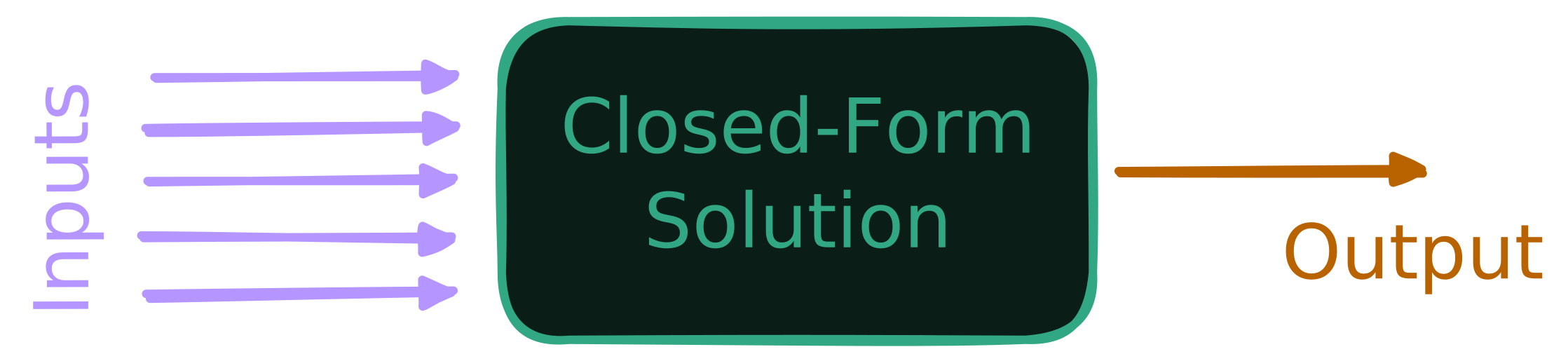
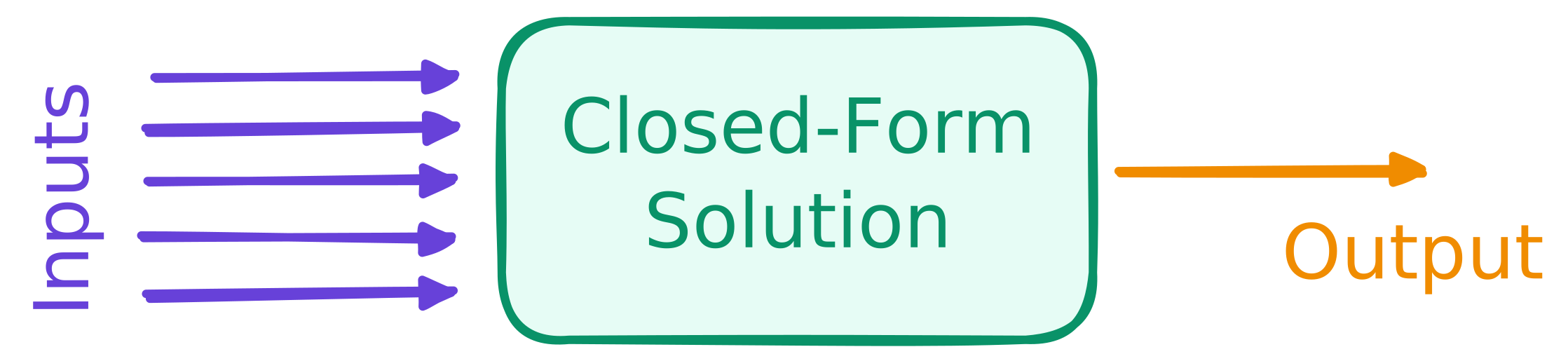
A closed-form solution is not a simulation, but rather a perfect equation that accurately reflects the behavior of a system. It takes a set of inputs and, in a finite number of steps, produces a desired output.
Closed-Form Equations in Aerospace
The physics that describe the falling bowling ball can be expressed in a set of closed-form equations. Fair warning, I will not explain them because it isn't the point of this post. Feel free to skip over this.
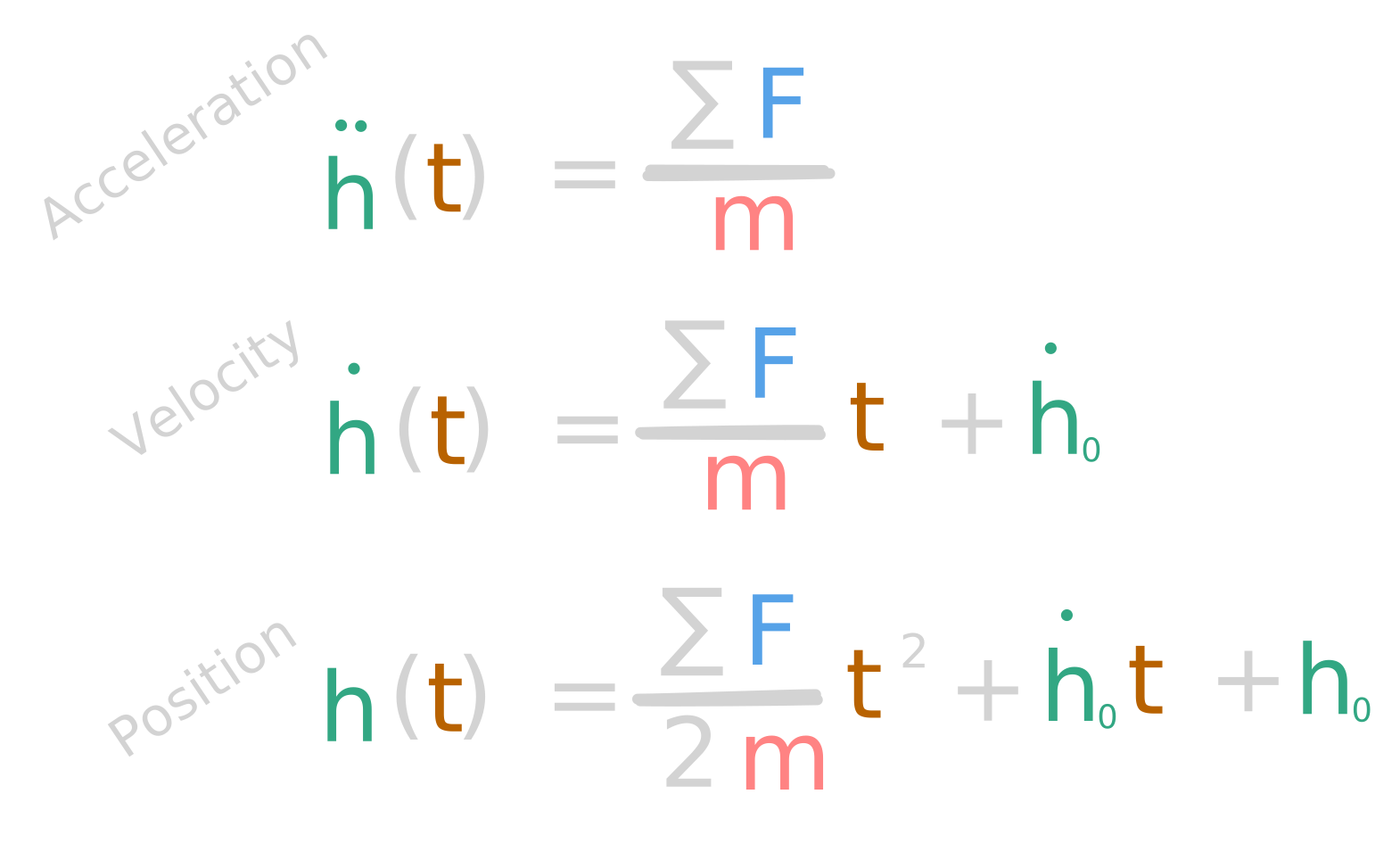
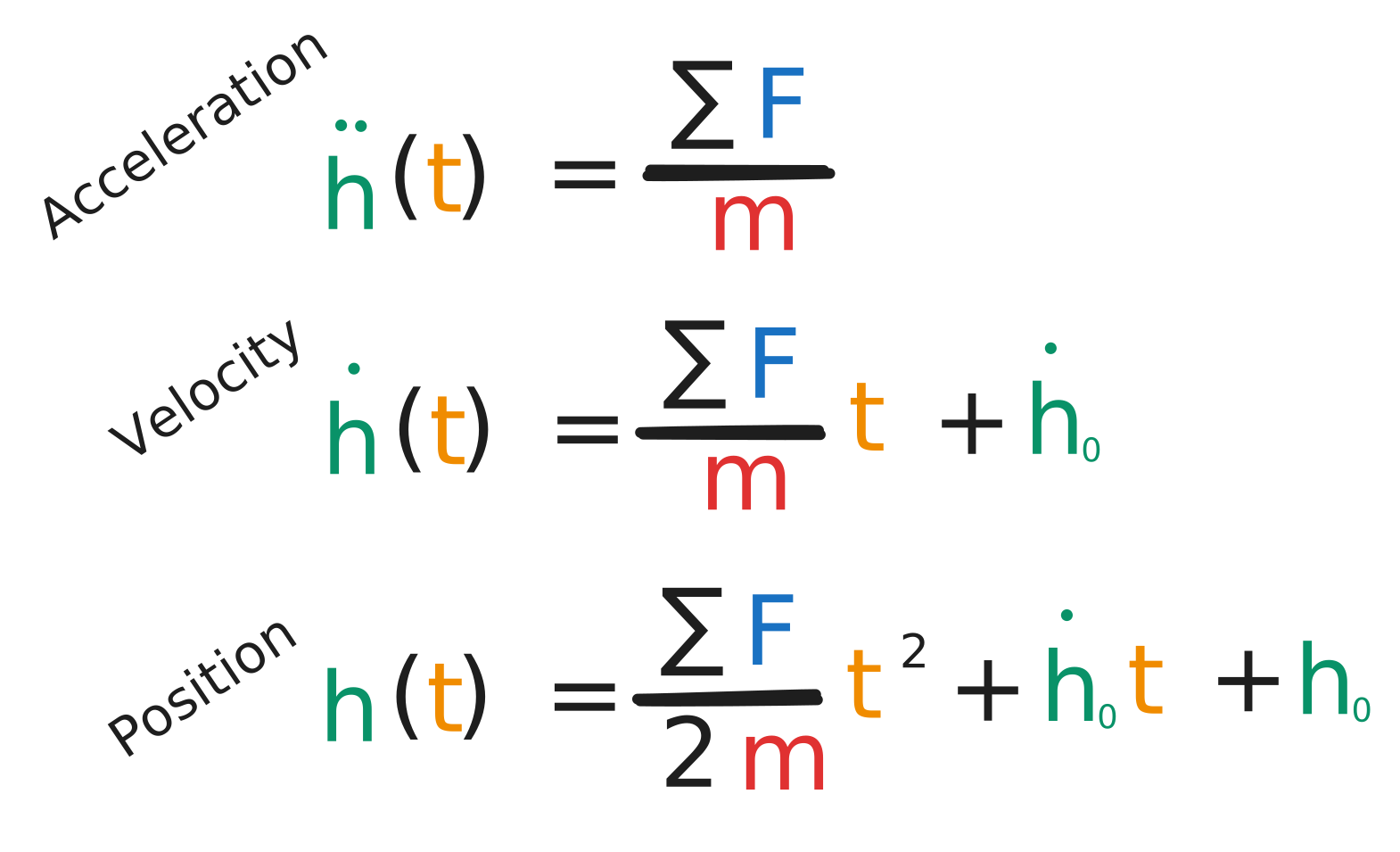
If you assume that there is no air resistance, these equations can be used to fully calculate the motion of the falling bowling ball.
Closed-Form Equations in Finance
There are closed-form solutions for a variety of financial concepts as well. Here is one that calculates the future value of a savings account based on a simple compound interest equation. You may remember it from your algebra classes:
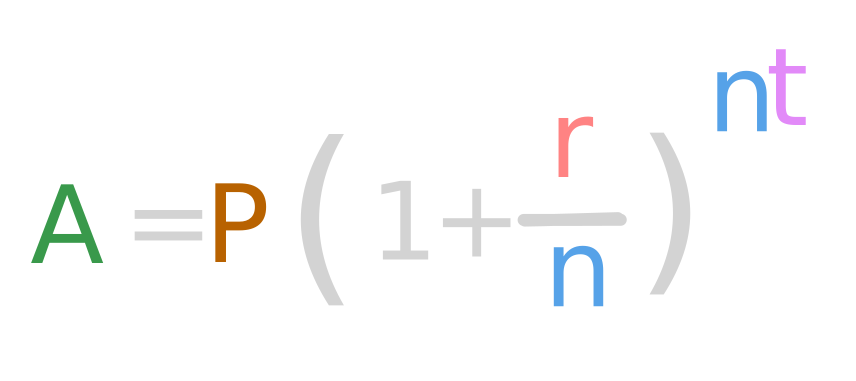
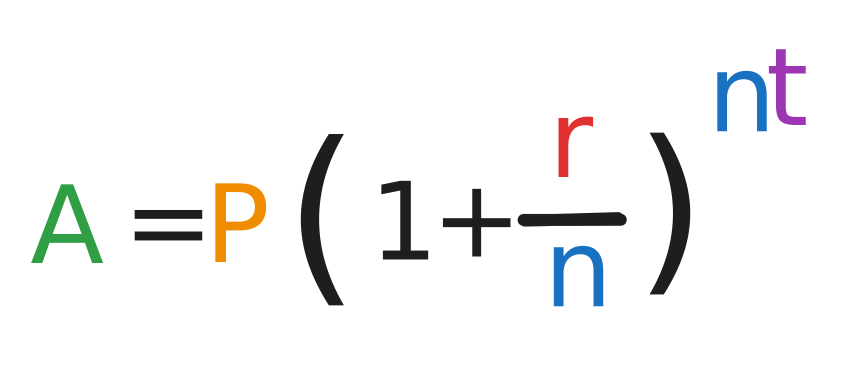
Where:
- A is the final amount
- P is the initial investment (principal)
- r is the annual interest rate as a decimal (e.g. 0.05 for 5%)
- n The number of times interest compounds per year (365 for daily or 12 for monthly)
- t is the number of years your money is invested
If you invest in a CD (Certified Deposit) or a fixed-rate savings account, you can use this equation to calculate the value of your savings at any point in the future.
The Limitations of Closed-Form Equations
Unfortunately, there are limits to what is possible with closed-form equations. Take the bowling ball equations, for example. Notice that all three kinematic equations depend on ∑F. Without air resistance, this term is only made up of the force of gravity, which is constant. Air resistance is not constant, though. It depends on the velocity (speed) of the ball. Suddenly this group of equations becomes impossible to solve.
Likewise, calculating your savings with a compound interest equation assumes the interest rate is constant. If the interest rate changes over time, which it likely does, the equation becomes impossible to realistically solve.
The field of numerical analysis is dedicated to solving these complicated systems. One of the most effective and timeless techniques to overcome these limitations is to run the closed-form equations multiple times over small time steps. For example, over a small timestep the aerodynamic drag on the bowling ball is roughly constant. Over a small timestep, the interest rate on your savings account is constant.
Splitting these problems into smaller time steps is the foundation of simulation.
Deterministic Simulation: The Corporate Standard
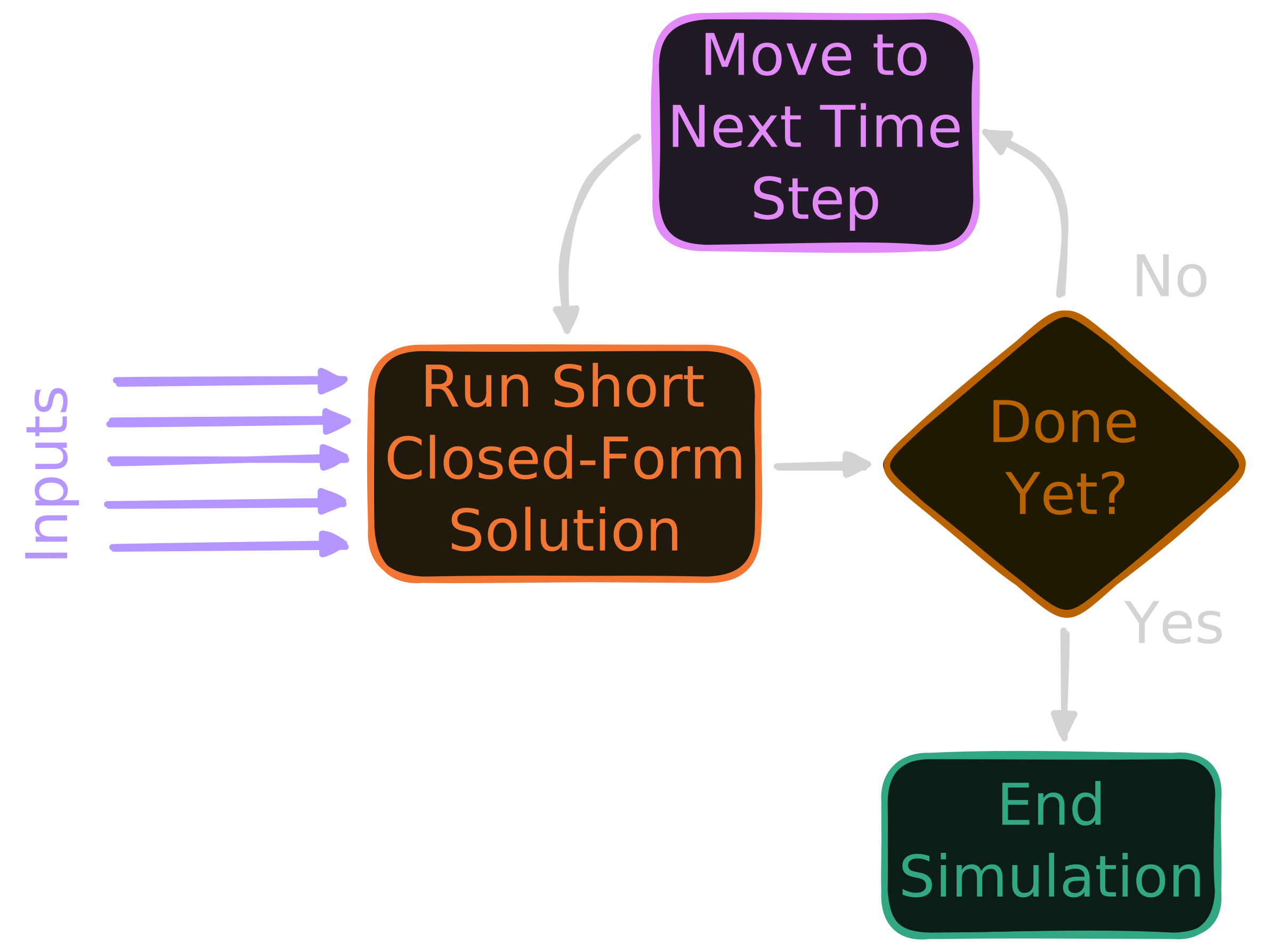
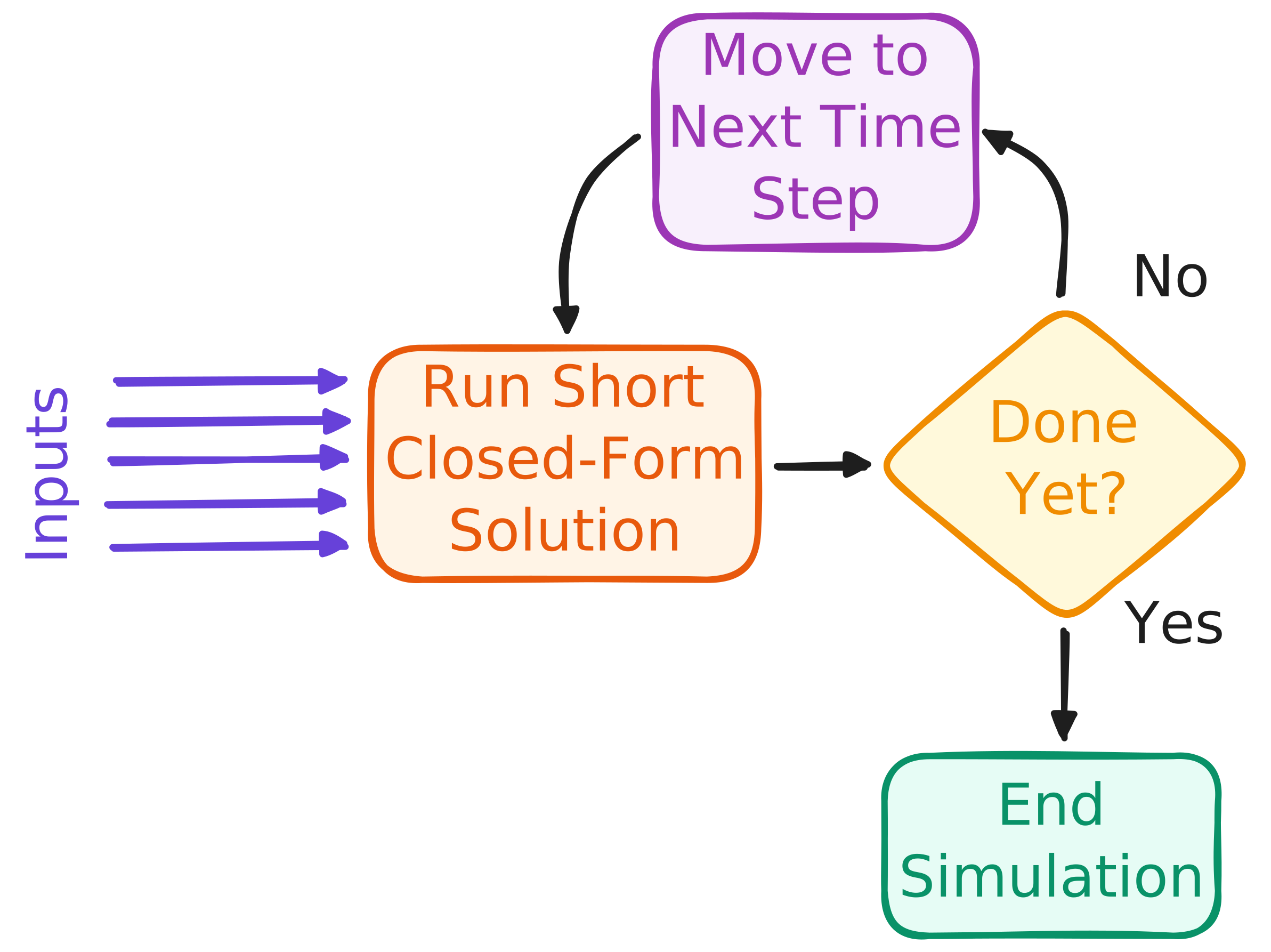
A deterministic simulation is the simplest kind of simulation. It takes the closed-form equations from the previous section and runs them repeatedly over time. Same inputs, same assumptions, same world; therefore the same output every time. The smaller the time steps, the more accurate the result, but the underlying logic never changes.
Assumptions in Determinism
While deterministic simulations make it possible to find solutions to overly complicated systems, they do so with some pretty hefty assumptions. At their core, they assume that the world behaves perfectly and predictably. These assumptions might include things like:
- 1. Your net worth grows at a steady rate every year
- 2. Inflation is a steady, predictable pace forever
- 3. Static taxes apply across broad account buckets
- 4. Future life milestones occur on rigid dates with fixed costs
Monarch's new "advanced simulation" that just debuted for $200/year is a textbook deterministic model. It depends on rigid assumptions to produce a single prediction of your future.
The Risk of Assumptions
While it's nice that Monarch lets you change the exact values behind their assumptions, giving you only one future prediction can dangerously mask risk in your financial plan.
Imagine a mortar launching a shell through the air to hit a target. Under simplified conditions, you can calculate a perfect mathematical trajectory. Simulating that trajectory will show a successful hit every single time.
Deterministic Simulator
Press launch to see a single deterministic trajectory
No matter how many times you run it, the result never changes. That's what makes this simulation deterministic.
The problem is that real life has wind gusts. The direction and intensity of the wind can dramatically alter the shell's path. If you confidently launch without accounting for this variability, you might miss the target completely. Wind gusts are to ballistics what market volatility is to retirement planning: unpredictable, powerful, and impossible to ignore.
The calculations made by Monarch's financial simulation have similarly drastic limitations. If you enter retirement expecting a continuous, uninterrupted increase of your net worth based on flat historical averages, you won't take the steps necessary to prepare for sequence of returns risk. Two retirees with identical average growth can end up with wildly different outcomes depending on whether an economic downturn occurs earlier or later into their retirement. The tool that told you your future was 100% safe might mislead you into a false sense of security that brings your retirement plans to ruin.
Deterministic simulations are useful for intuition, but they collapse the moment uncertainty enters the picture. To handle wind gusts, or market volatility, we need a different class of simulation entirely - a tool that builds on to these concepts in such a way that we can account for the chaos in the real world. That tool is stochastic simulation.
Stochastic Simulation: Real-World FMEA
Deterministic simulations show you one future. Stochastic simulations show you all the plausible futures.
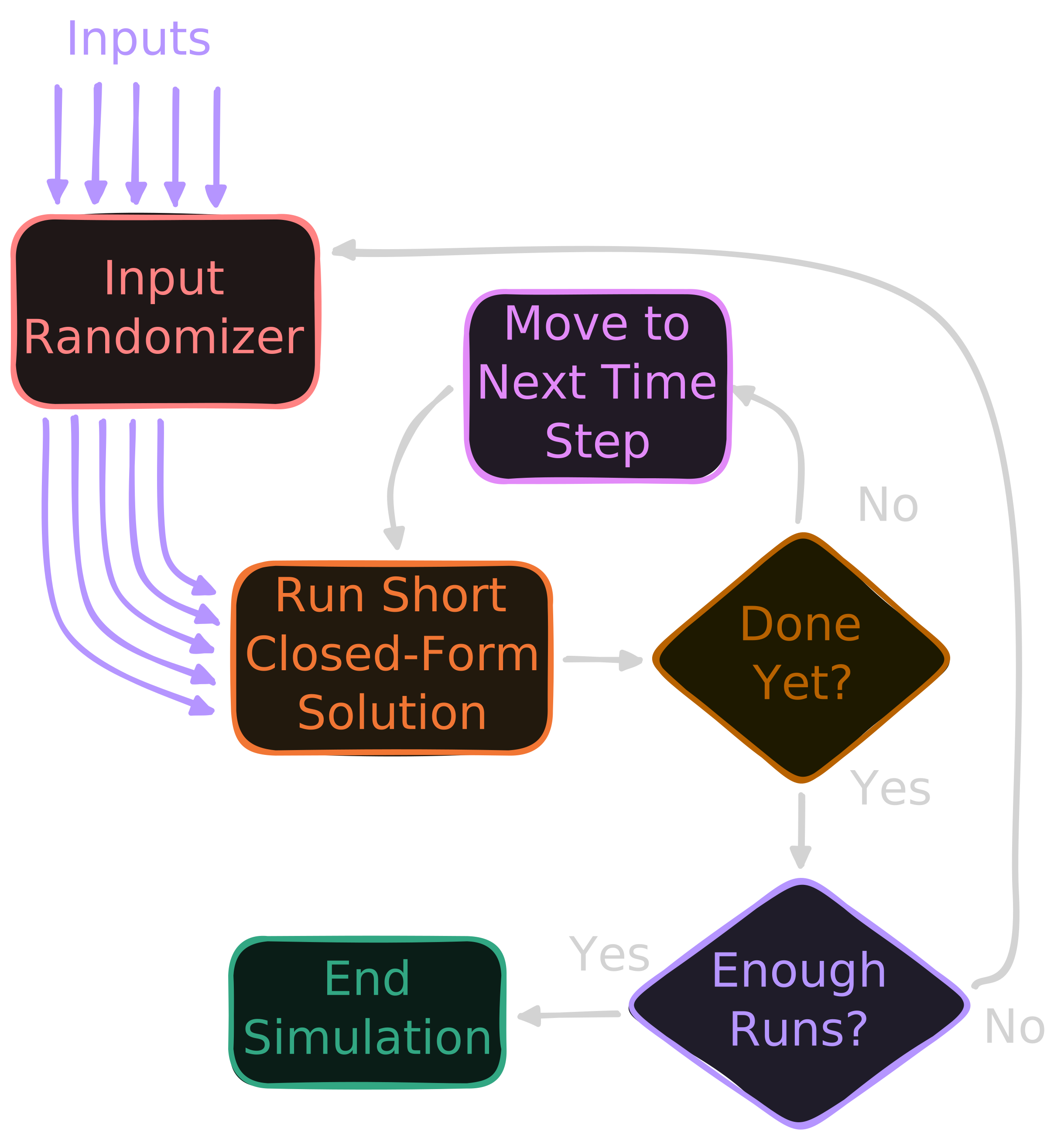
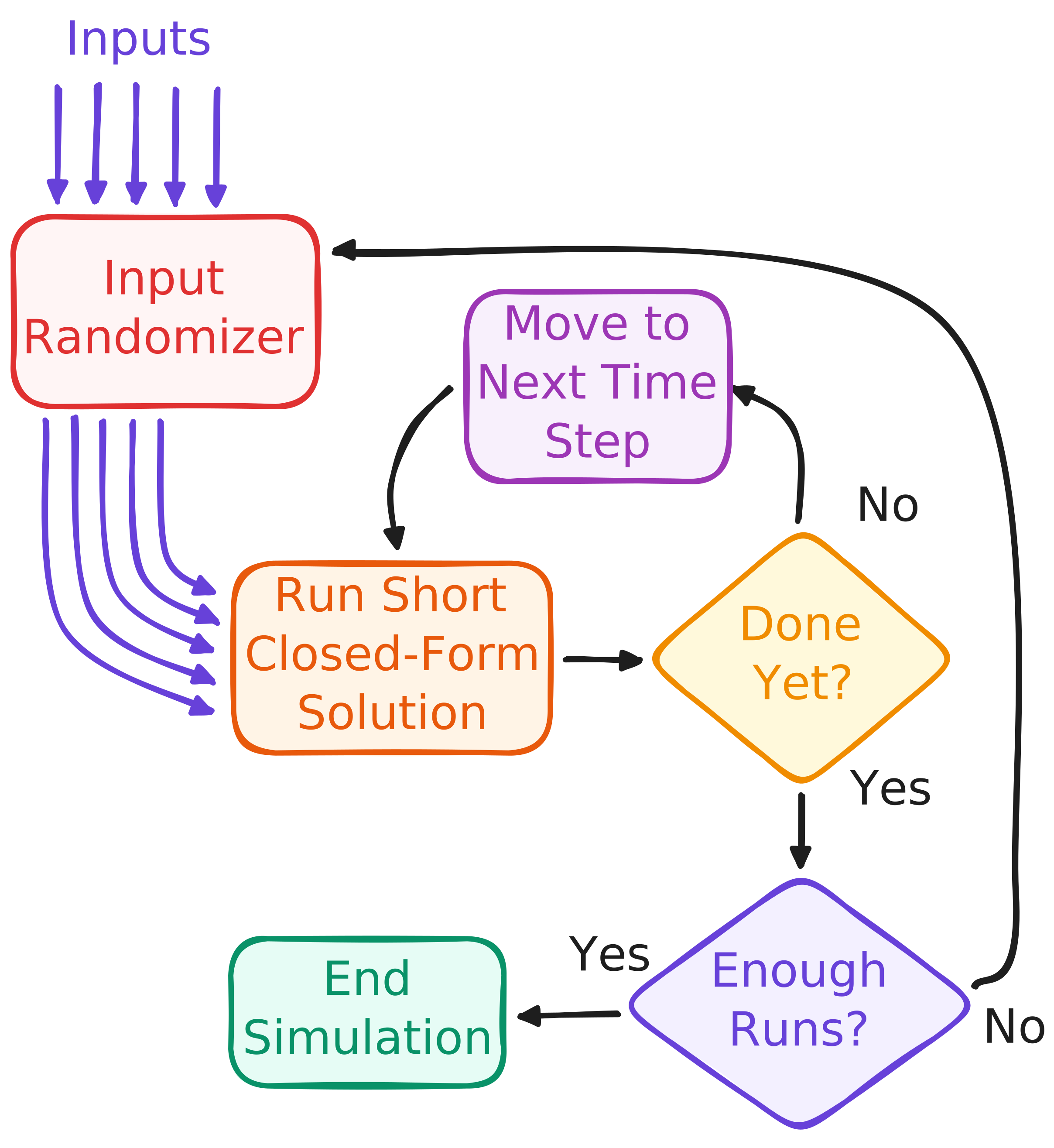
Also called Monte-Carlo Analyses, stochastic simulations run a deterministic model hundreds or thousands of times over, but with one key twist: between each run, the inputs are randomized according to realistic distributions. Instead of assuming the world behaves perfectly, we let it behave the way it actually does: with noise, variation, and uncertainty.
Stochastic Mortar Simulation
In our mortar example, a stochastic simulation shifts the wind speed and direction for every single flight path.
Stochastic Simulator
Press launch to see multiple simulated trajectories
But in a true aerospace simulation, we go far beyond wind. Other factors that meaningfully alter the trajectory include:
- 1. Air density (temperature and pressure)
- 2. Aerodynamic drag
- 3. Propellant temperature
- 4. Barrel wear and fouling
- 5. Aiming error (e.g. 0.05° of deviation)
Randomize all these across hundreds or thousands of runs, and you don't get a single line, you get a distribution of possible trajectories.
Where Real FMEA Happens
This is where true Failure Modes and Effects Analysis begins. In aerospace, we evaluate the results from two angles:
- Probability of Success
- How often the mission works
- Cost of Failure
- What happens when it doesn't?
If 95% of the mortar shells land near the target, that is a strong average probability. But if the remaining 5% land on civilian buildings, that mission is unacceptable no matter how good the average looks.
Average outcomes are irrelevant when tail-risk outcomes are catastrophic.
The possible outcomes from our simulation then inform a resilient planning process: aim lower, reinforce the casing, adjust propellant temperature, or fire multiple rounds to guarantee safety margins.
FMEA in Finance
Finance has the same structure: a wide distribution of possible futures. Some are benign, while others are disastrous. Market volatility, inflation variability, lifestyle shocks, and savings inconsistency all behave like the "wind gusts" and "barrel wear" of personal finance.
A deterministic model hides these risks. A stochastic model reveals them.
Stochastic simulation doesn't eliminate uncertainty, it makes it visible, measurable, and actionable. It's the only way to plan for a future that refuses to behave perfectly.
Bringing Stochasticity to Your Finances
This stochastic-simulation philosophy is exactly how we are approaching personal finance at Catosphere. Your retirement plan shouldn't rely on a single, perfect-weather line graph. It should be modeled like a real mission, with turbulence, uncertainty, and variation baked in.
A stochastic financial simulation tests your baseline assumptions against thousands of potential economic realities. It throws randomized market volatility, variable inflation spikes, and unexpected life friction at your portfolio to reveal exactly where you plan breaks down and where it thrives.
By mapping the full range of potential outcomes, you gain a true probability distribution. You can see likelihood of success, visualize your worst-case scenarios, understand your tail-risk exposure, and build a strategy that keeps your financial future secure no matter which way the wind blows.
As a proof for our product vision, we have built a simple tool that simulates the next 10 years of your net worth using a limited stochastic model. You can adjust your starting balance, monthly income, and monthly expenses to see the how your trajectory shifts. By default, the only variation is inflation, but if you select that your money is invested in stocks, you'll see the power of stochastic simulation first-hand.
10-year projection based on simple statistical models
Final Range (high confidence)
This demonstration runs on the exact architectural foundation that will power our full financial platform. The results are based on simple statistical models seeded by historic market performance between 2016 and 2026. Inflation is not applied to income or expenses. This demo uses 5 simulation seeds to show sample paths; it does not represent a complete statistical risk analysis.
Your Finances, Stochastically Simulated
Our competitors rarely look forward, and when they do, they use simple, deterministic math to give you a false sense of security.
At Catosphere, we're bridging the gap between daily budgeting and long-term planning. By connecting your goals and your spending, to our aerospace-grade simulation, the path forward becomes clear. Leave the guesswork behind and embrace data-backed confidence.
We are currently in active development of our suite of personal finance tools. If you want an approach to personal finance that adapts to your life instead of fighting it, join our waitlist. You'll help shape the future of Vision-Aligned Budgeting and have a chance to participate in our early access program.