Introducing the
Vision-Aligned Budget


Introduction
Imagine driving a car using only the rear-view mirror. You'd see every turn you already made, every mistake you can't undo, but nothing of the road ahead. Most budgeting tools do exactly this. They show you the past with beautiful charts, yet leave you guessing about the future. We don't need another pretty mirror. Instead, we need a map. One that shows where we are headed and how the choices we make today influence our financial outcomes. At Catosphere we are building the tool that will make Vision-Aligned Budgeting accessible to everyone. Read on to learn more!
The Vision-Aligned Budget
The core principle behind the Vision-Aligned Budget is that your short-term spending and saving decisions should be driven by your long-term financial plan. It is a characteristic of the human race that we like to plan, because a good plan mitigates the fear we have of an unknown future. From a very young age until the day we die we answer questions like:
"What will I do when I grow up?"
"What hobbies do I want to learn?"
"Where do I want to go to college?"
"How can I best prepare for retirement?"
"What legacy will I leave behind?"
Some plans come easy while others feel incredibly daunting. Often, our financial goals fall into the latter category because we don't have good tools to help us make an actionable plan to achieve them. Like a ship sailing to a distant island without a compass, it is easy for us to lose our way when it comes to our finances.
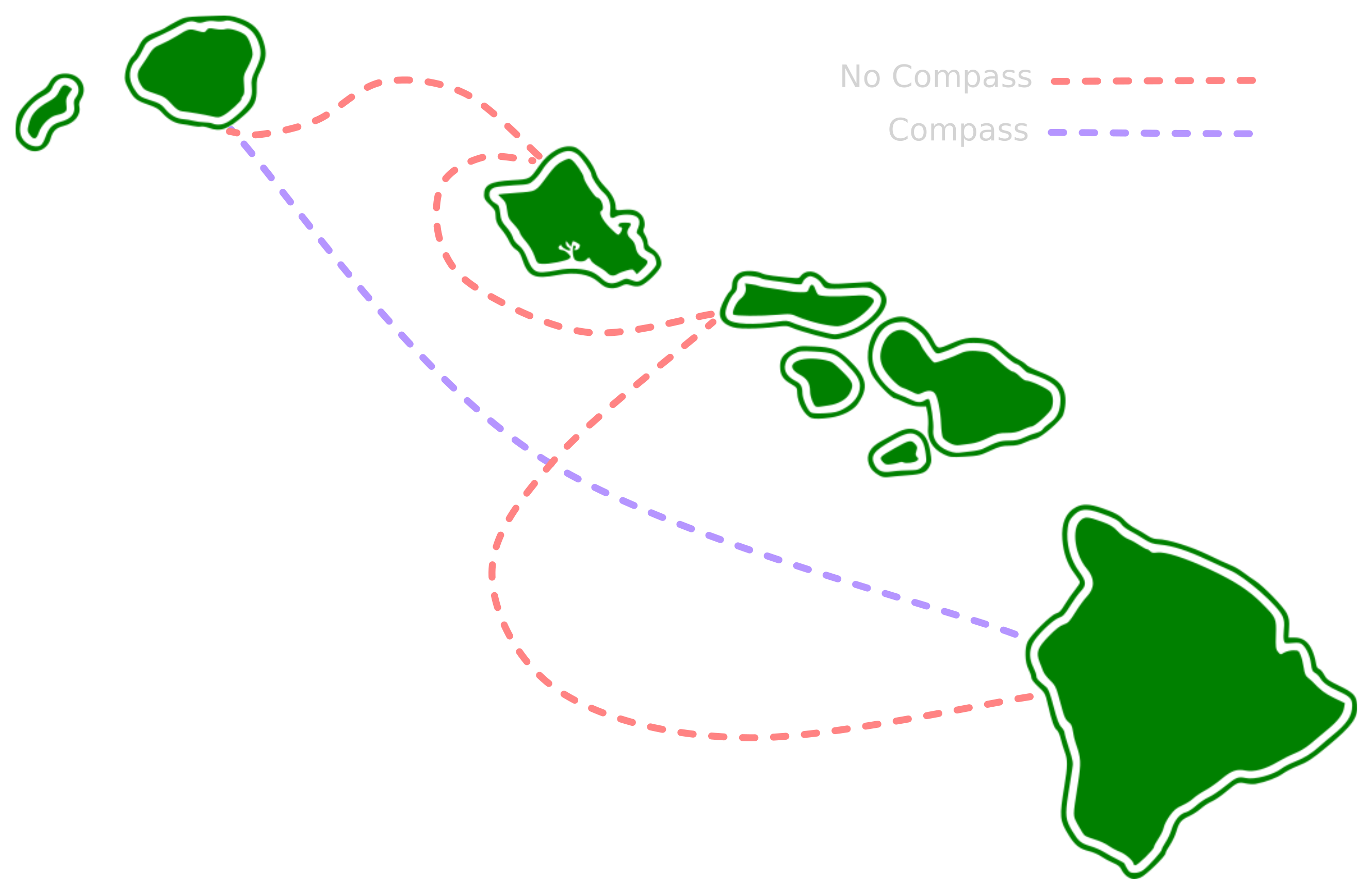
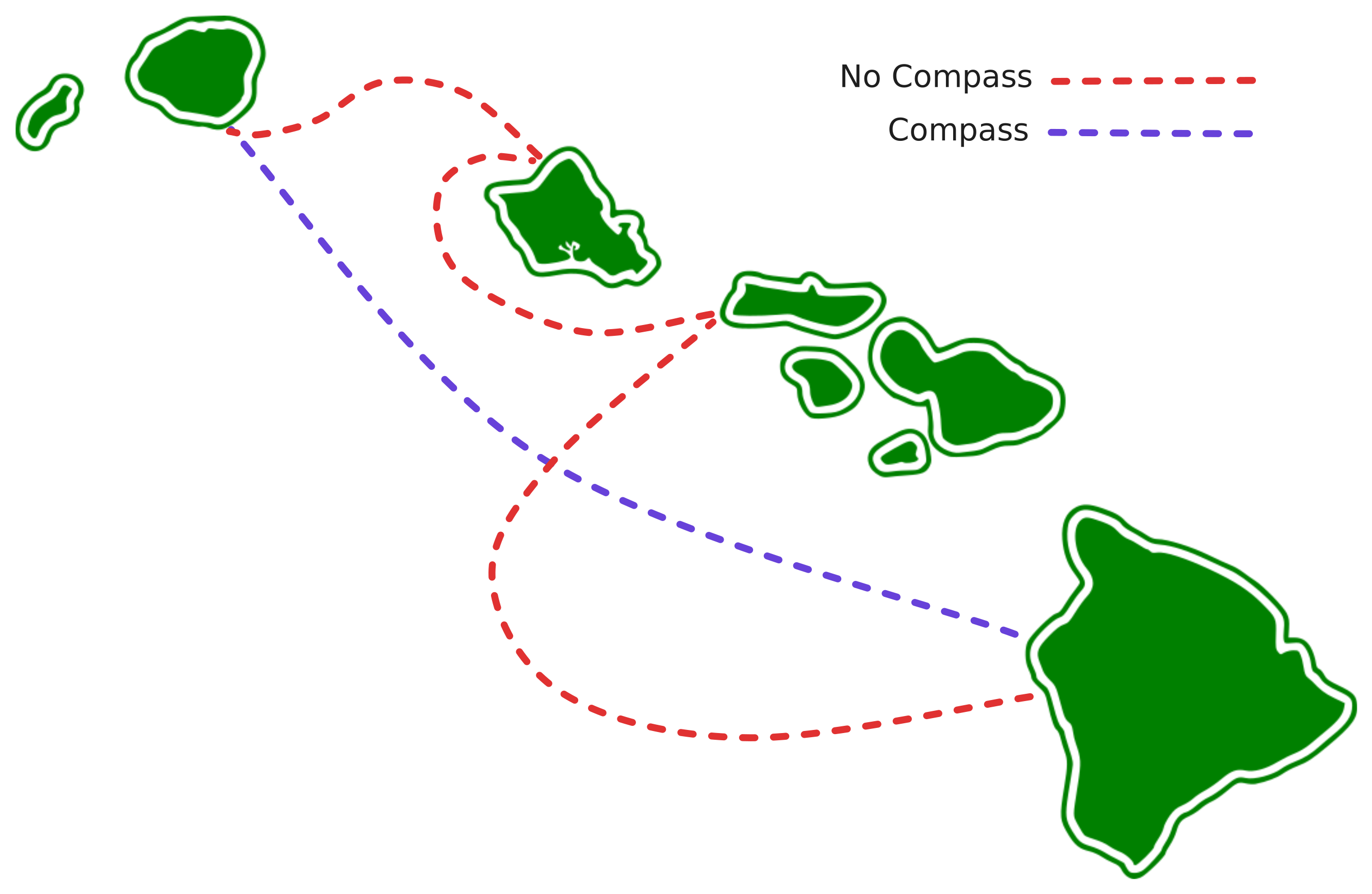
Managing long term goals manually is a daunting task. There are calculators available that can show you how your money will grow over time, but when it comes to prioritizing goals and saving towards them, they offer little help. Your housing, your retirement, and your vacation goals all compete for the same pool of money, and without structure, the loudest or most urgent usually wins.
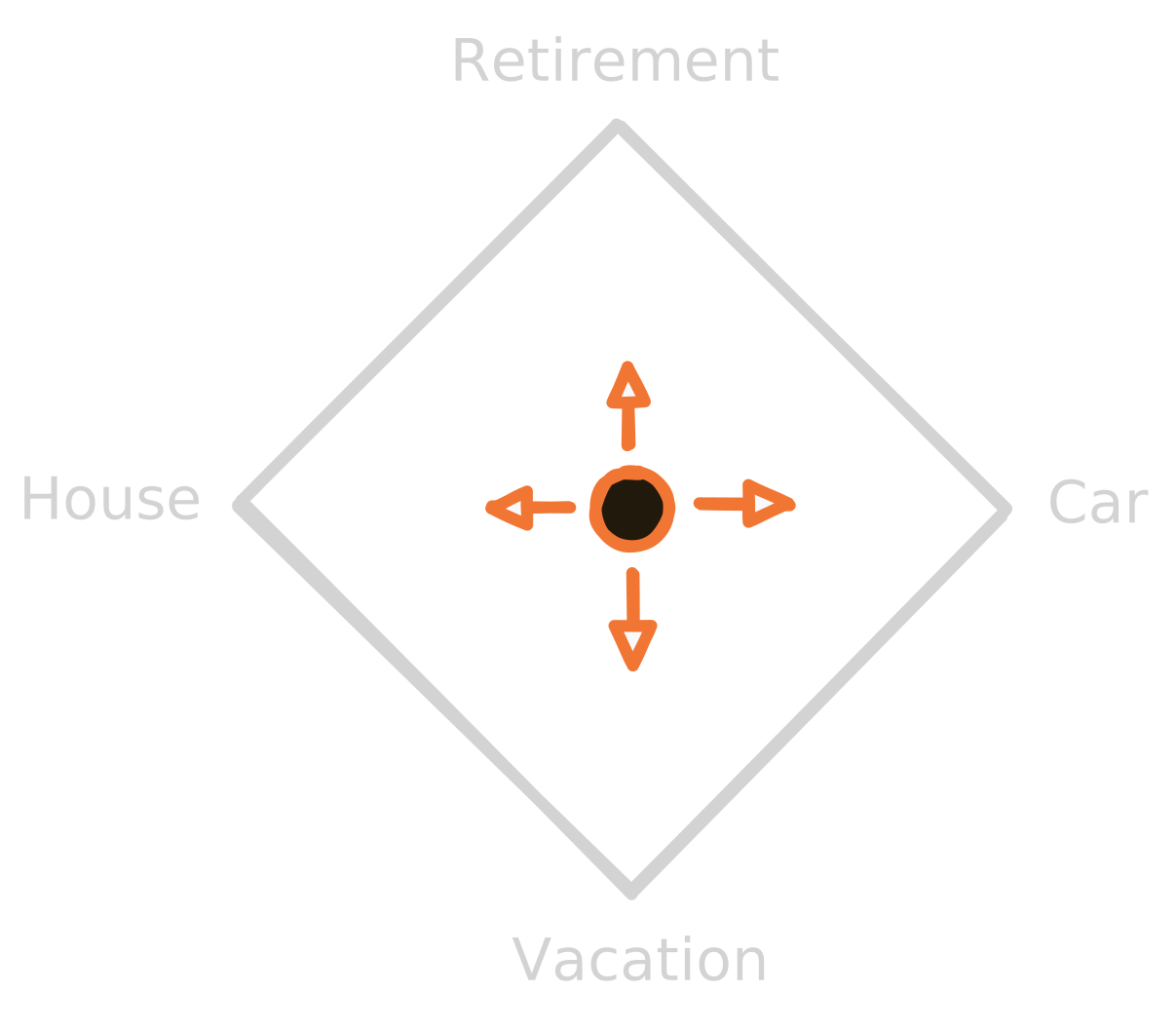
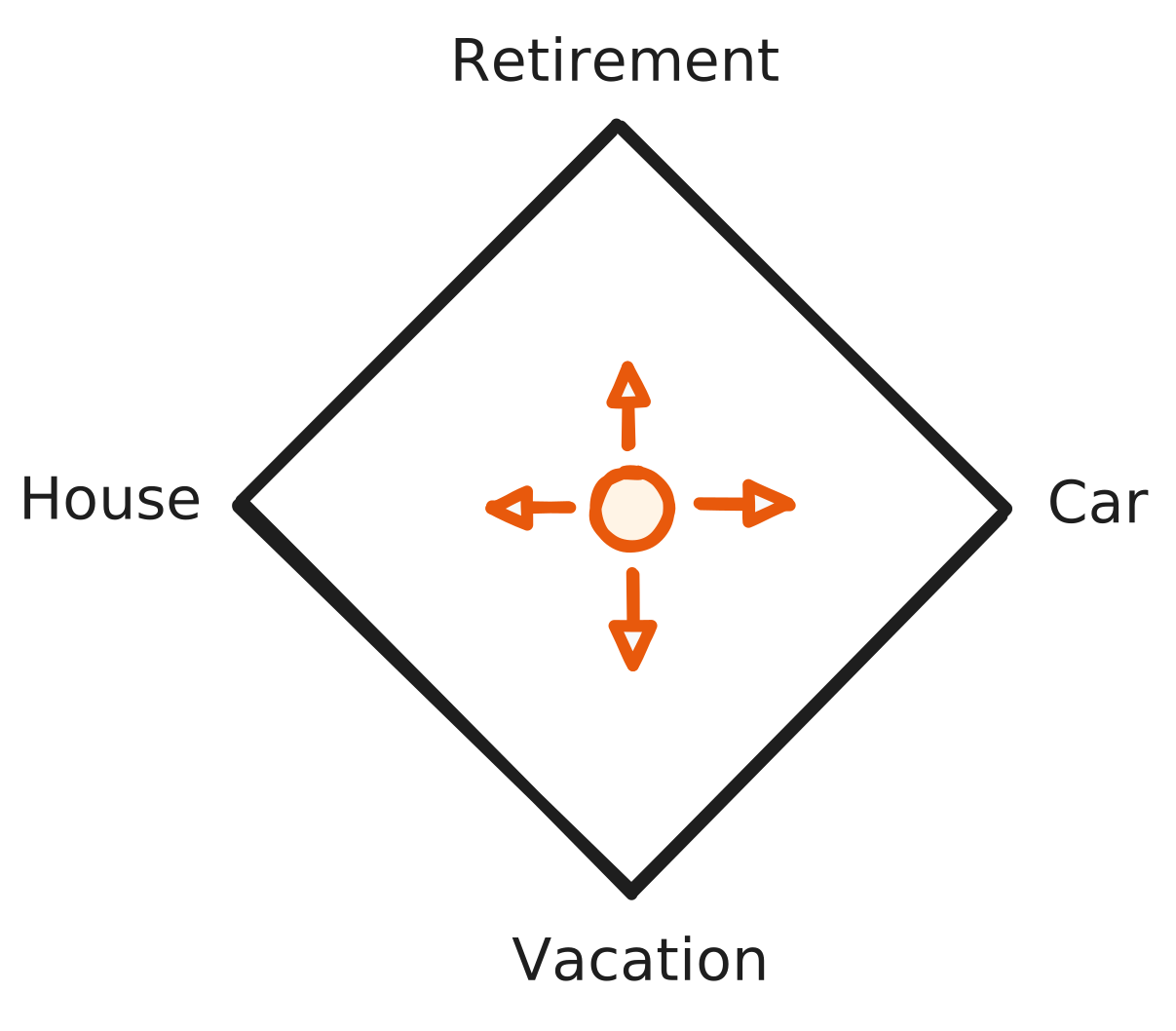
This is why the Vision-Aligned Budgeting method is so important. It helps you create a plan with achievable goals and gives you the compass you need to stay on track. At Catosphere, we are building a platform that makes this way of managing your finances a reality. Through a powerful goal system, flexible budgeting tools, and aerospace-grade simulation techniques, we aim to make the most effective financial management application available.
Powerful Goals
Most budgeting apps tag on goals as an afterthought. They provide basic savings targets and let you assign money to them, but they don't help you create a plan to achieve them.
Our goals are different.
Because we see financial goals as the foundation of a budget, the system we are making to create, manage, and track goals is built from the ground up to be powerful and flexible. There are two main types of goals:
- Static Goals
- have a fixed amount and due date. For example, I am going to take a $2,000 vacation in 6 months
- Dynamic Goals
- are triggered by certain criterion. For example, I am going to buy a house once I have $50,000 saved
The Vision-Aligned Budget uses both to create a personalized saving and investment plan for you. Using the static goal example above, if you need $2,000 in 6 months, you need to save $333.33/month. Due to the short timeline, it's best to keep this money in a savings or HYSA, instead of riskier investments.
Of course, this new vacation goal will delay your house purchase goal.
This is why goals are the foundation of the Vision-Aligned Budgeting method. Every goal you create becomes part of a larger system that understands how your priorities interact to shape your financial future. Instead of treating goals as isolated savings buckets, we treat them as interconnected decisions that influence each other.
For more information about how we are designing the most advanced financial goal system ever created, check out our effective goals blog post.
Flexible Budgeting Tools
Would you rather spend your evening fixing a spreadsheet or use a system that adapts to real life? Perhaps one of the largest issues with budgeting today is the amount of manual labor it takes to keep up with your plan. Every month we constantly have to adjust our budget based on fluctuations in bills and income.
At Catosphere, every decision we make in the creation of our budgeting system is centered around one core philosophy: minimize manual effort.
It turns out the amount of manual effort required in budgeting is largely attributable to the fact that we budget on monthly timescales. It works nicely for rent and subscriptions, but it breaks down when you look at semi-annual car insurance payments or biweekly income.
At Catosphere, we took a step back and asked ourselves: what is the point of a monthly budget when we can see your entire financial future? An envelope budget for your next insurance payment isn't necessary when you can clearly see how that future payment affects the trajectory of your net worth.
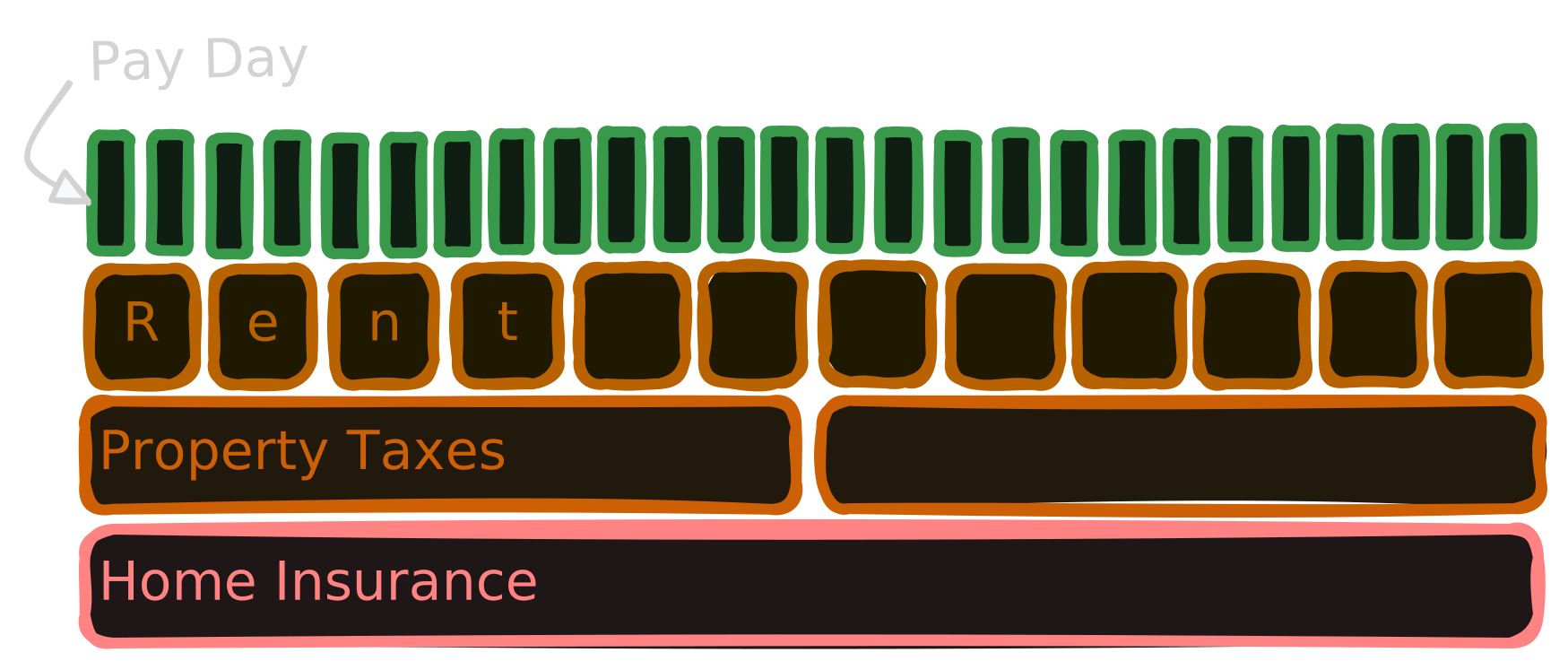
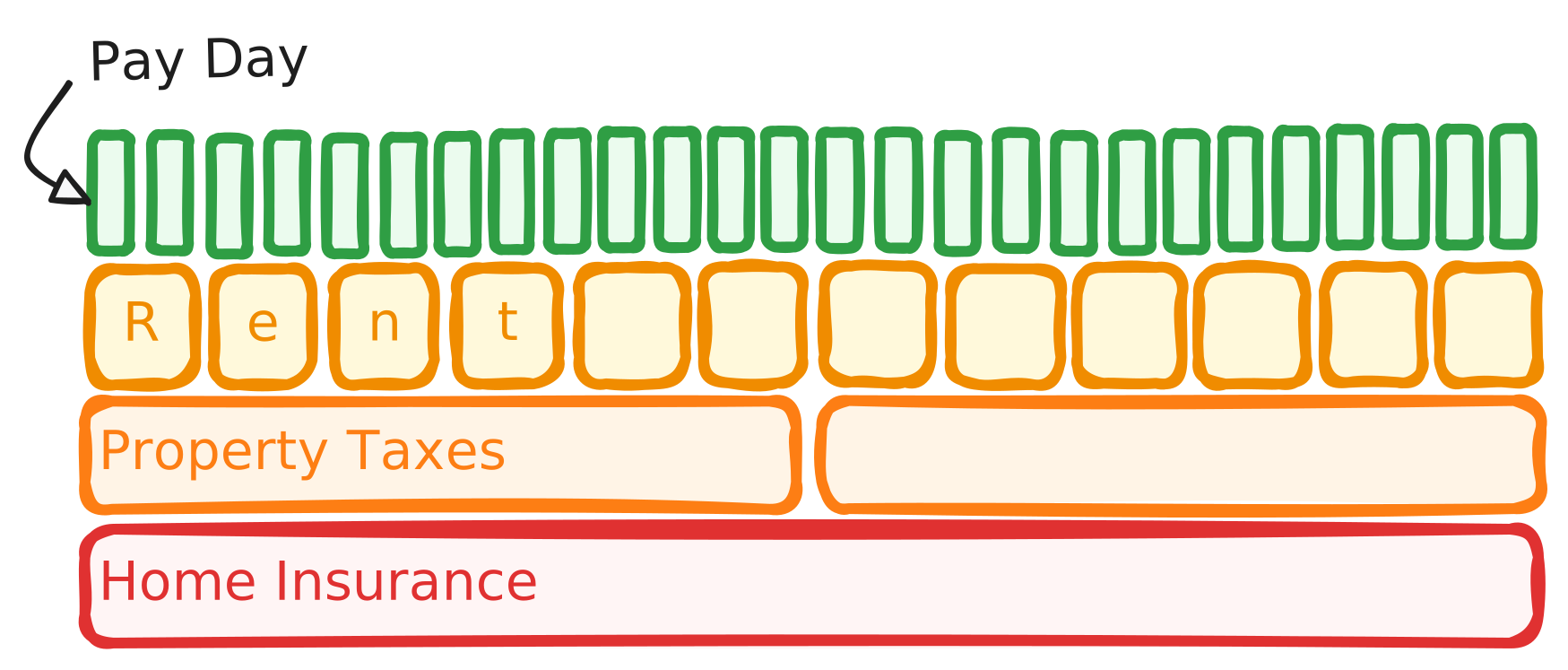
In long-term financial planning, budget categories exist for one reason: to keep you on track in the moment. So our system will allow you to create custom budgeting categories and assign each one a unique frequency that actually matches how you spend (e.g., weekly, monthly, yearly).
For categories where it makes sense, we will project their planned amount into the future, applying inflation and seasonal variations. When you overspend or underspend, the system will rebalance and compensate for the difference automatically, without requiring hours of manual cleanup.
Flexible budgeting isn't just about convenience. It's about creating a system that adapts to real life. When your categories run on the timelines that actually match your spending, your budget becomes clearer, more accurate, and dramatically easier to maintain.
Aerospace-Grade Simulation
The core technology that makes Vision-Aligned Budgeting feasible is an aerospace-grade simulation engine. In order to create savings and investing plans that will help you achieve your goals, we need to know how your money will grow over time.


There are two main categories of simulations:
- Deterministic
- Systems where every input is known and fixed. Outcomes do not account for randomness
- Stochastic
- Systems where inputs contain uncertainty. Outcomes account for randomness
Deterministic simulations can be helpful benchmarks, but they make assumptions that don't reflect the messy reality of financial markets and personal finance. Most apps that offer projections use deterministic simulations, and they all come with disclaimers like, "the stock market grows 7% per year, consistently," or, "inflation is always 3% per year." When you average these things out over decades, it's technically accurate, but it doesn't accurately show the day-to-day swings that can make or break a financial plan.
Deterministic simulations are also simple at the core. They are little more than static equations that you could write down on paper and calculate by hand. On the contrary, the problems we face in aerospace are not simple. A given flight will be impacted by wind, weather, fuel load, and countless other variables that change by the second. The world of finance is the same way. Markets rise and fall, inflation fluctuates, and economic conditions shift constantly.
This is where stochastic simulations come in. Instead of coming up with a single incorrect solution, stochastic simulations apply randomness to their inputs and simulate many possible futures.
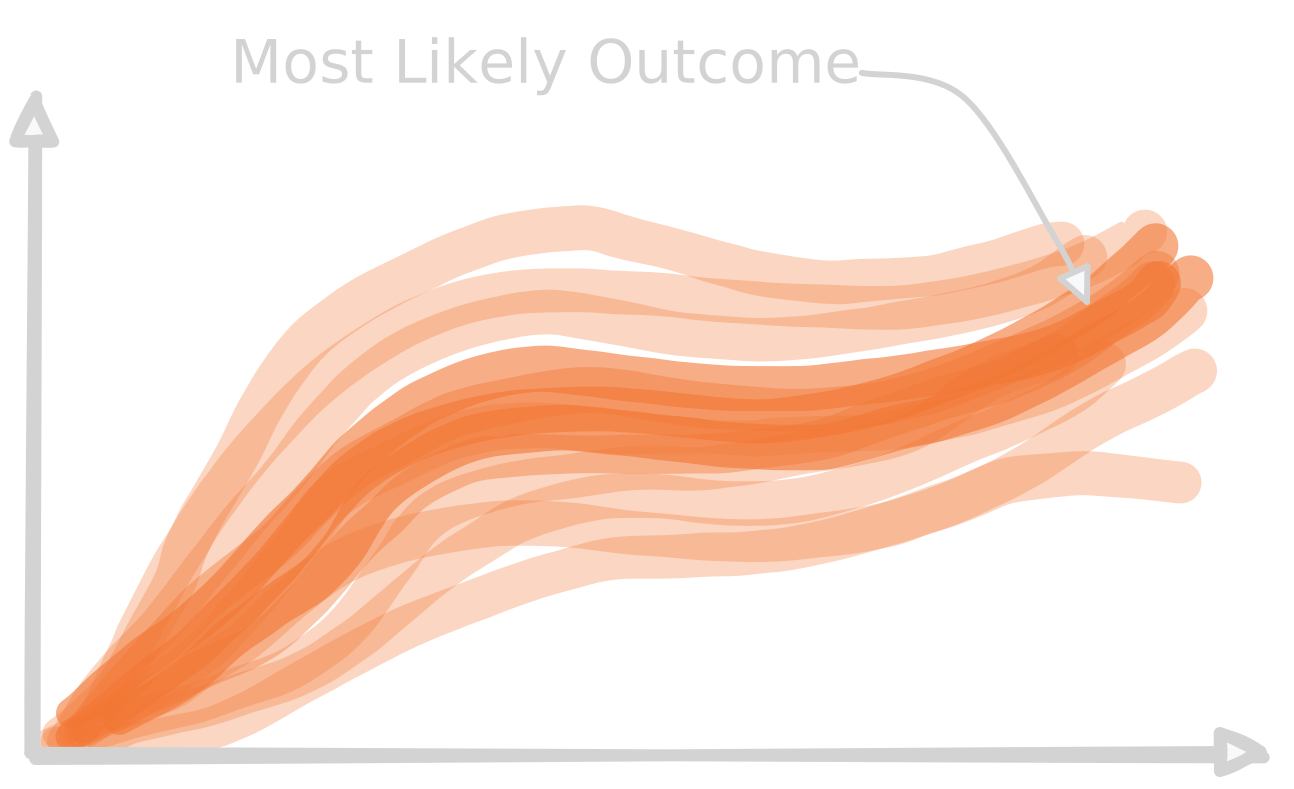
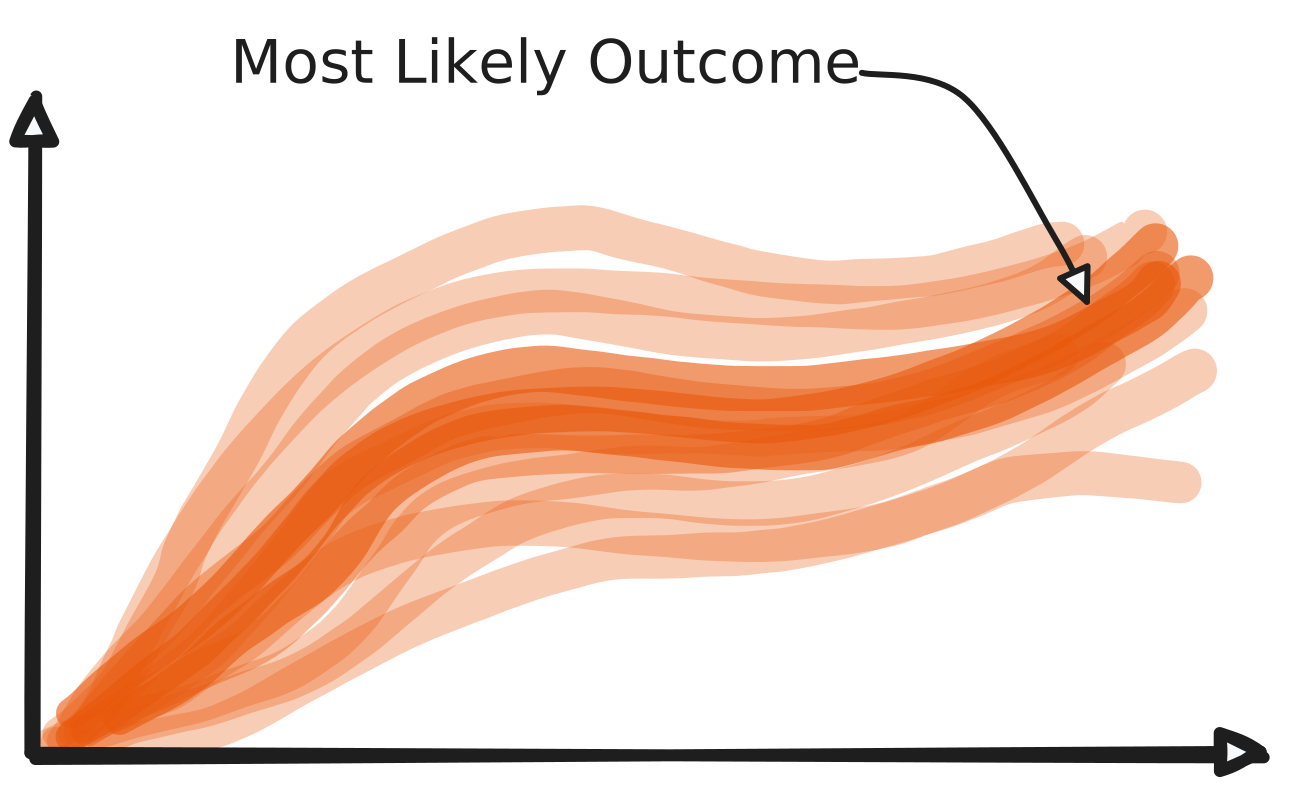
Some of these futures will be optimistic, some will be pessimistic, and patterns will start to emerge that show which futures are more likely than others.
For more information about how we are applying aerospace simulation concepts to your wallet, check out our simulation blog post.
Your Finances, Vision-Aligned
Most tools are a rear-view mirror. They tell you where your money went, but leave you guessing about where you're going.
At Catosphere, we're bridging the gap between daily budgeting and long-term planning. By connecting your goals and your spending, to our aerospace-grade simulation, the path forward becomes clear. Leave the guesswork behind and embrace data-backed confidence.
We are currently in active development of our suite of personal finance tools. If you want an approach to personal finance that adapts to your life instead of fighting it, join our waitlist. You'll help shape the future of Vision-Aligned Budgeting and have a chance to participate in our early access program.